Concept: Designing Beyond Aesthetics
A successful kitchen remodel begins long before selecting finishes. In my practice, working with mid-range and premium clients across the U.S., the first step is always defining how the kitchen will function within the broader home remodel. A kitchen is no longer an isolated workspace—it is a social hub, a circulation zone, and often an extension of living and dining areas.
For example, a recent client in a 2,400 sq. ft. suburban home wanted a visually striking kitchen. However, their real issue was poor workflow and lack of storage. The design solution prioritized zoning and circulation over purely decorative upgrades. This is where professional kitchen design diverges from surface-level renovation—it solves spatial problems first, then builds aesthetics on top.
Layout: Functional Logic and Spatial Efficiency
Every kitchen remodel should be grounded in layout logic. The traditional work triangle still applies, but in 2026, we refine it into zones: preparation, cooking, cleaning, and storage. This is especially critical in open-plan layouts where visual clarity must align with function.
In smaller kitchens, I often compress the triangle into a linear workflow with high-efficiency storage. In larger spaces, I separate zones—placing prep areas on an island while keeping cooking and cleaning along perimeter walls. This reduces congestion when multiple users share the space.
A common mistake is oversizing the island without considering clearance. Clients prioritize scale for visual impact but compromise ergonomics. In premium projects, circulation space (typically 42–48 inches) is treated as a non-negotiable design parameter.
Materials: Performance-Driven Selection
Material selection is where interior design decisions directly impact longevity and maintenance. Cabinet finishes, countertops, and hardware must align with both aesthetic goals and daily use.
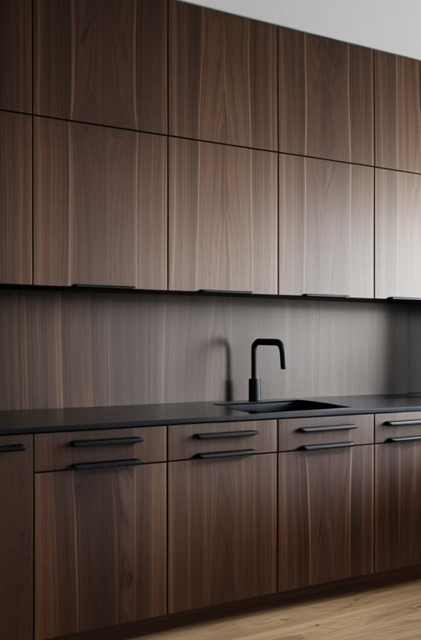
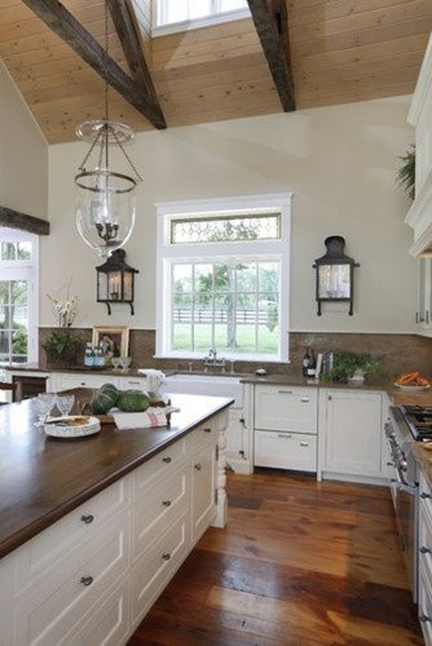
For cabinetry, matte lacquer and textured wood veneers dominate in 2026, particularly in European kitchens. They offer a refined, low-reflection surface that hides wear better than high-gloss alternatives. In transitional kitchens, painted shaker profiles remain relevant but are increasingly paired with integrated hardware for a cleaner look.
Countertops are shifting toward engineered stone and porcelain. Clients often request natural stone, but I advise them based on usage. A busy family kitchen benefits more from durability than visual uniqueness.
Hardware is no longer decorative—it is ergonomic. Soft-close systems, full-extension drawers, and integrated pulls are standard in high-performing kitchens. These details may seem minor, but they define the user experience over time.
Costs: Understanding Where the Budget Goes
When discussing kitchen renovation costs, I break the budget into three core components: cabinetry, labor, and appliances. Cabinets alone can account for 30–40% of total kitchen remodel costs, especially in custom or semi-custom projects.
Layout changes significantly increase costs due to plumbing and electrical relocation. For example, moving a sink or cooktop can add thousands to the budget without improving usability if not strategically justified.
Clients often underestimate the cumulative cost of “small upgrades”—premium hardware, lighting layers, and internal storage systems. Individually minor, they can collectively impact the final budget by 10–15%.
From a broader perspective, aligning kitchen upgrades with a bathroom remodel or bath remodeling project can optimize labor costs and streamline timelines in a full home remodel.
Mistakes: What Clients Get Wrong
The most common mistake I see is prioritizing visual trends over functional needs. Clients invest heavily in finishes but overlook storage planning. The result is a kitchen that looks refined but performs poorly.
Another issue is underestimating storage diversity. Deep drawers, pull-outs, and vertical storage are essential. Standard shelving alone is insufficient for modern usage patterns.
Lighting is also frequently mismanaged. A single overhead fixture cannot support a layered lighting strategy. Task lighting, ambient lighting, and accent lighting must be integrated from the beginning—not added as an afterthought.
Finally, clients often fail to plan for future needs. Aging in place, changing family dynamics, and increased time spent at home all influence how a kitchen should function over time.
Trends 2026: Subtle Innovation Over Statement Design
In 2026, kitchen trends are shifting toward restraint and integration. Minimalist kitchens emphasize concealed storage, handle-less cabinetry, and seamless transitions between materials. European kitchens continue to lead with precision detailing and architectural consistency.
Transitional kitchens remain востребованы because they balance warmth and modernity. However, the detailing is becoming sharper—less ornamentation, more intentional contrast.
Technology integration is quieter but more intelligent. Hidden charging stations, integrated appliances, and sensor-based lighting systems are now expected in premium kitchen design.
Sustainability is no longer a trend—it is a baseline expectation. Clients are asking about material sourcing, durability, and lifecycle cost, not just upfront pricing.
Final Insight: Design as a System, Not a Collection
A high-performing kitchen is not a collection of beautiful elements—it is a system where layout, materials, and function are aligned. Whether you are planning a standalone kitchen remodel or coordinating with renovating bathrooms, the design must be cohesive at both the spatial and operational levels.
The difference between an average renovation and a successful one is not budget—it is decision quality. And that begins with understanding how the kitchen actually works.
Leave a Reply
You must be logged in to post a comment.